



For more than two decades, the Tara Baker case sat unsolved in Athens, Georgia, leaving a family without answers and a community without closure. Then, in 2024, a DNA breakthrough changed everything.
If you are trying to understand what actually happened, who Tara Baker was, how investigators finally cracked the case, and what happened at trial, this guide walks through the entire story in one place. No need to jump between a dozen news articles to piece it together.
Who Was Tara Baker
Tara Louise Baker was a 23 year old first year law student at the University of Georgia School of Law. She had graduated from Lovejoy High School and later attended Georgia College in Milledgeville before enrolling at UGA to pursue a legal career.
By all accounts, Baker was ambitious, hardworking, and building a future centered on public service. Friends and family described her as the kind of student who showed up early to the library and stayed late, determined to succeed in one of the most demanding academic programs in the state.
That dedication is part of what makes the Tara Baker case so haunting. She was days away from her 24th birthday when her life was cut short, and her promising future in law was never realized.
The Night of January 18, 2001
On the evening of January 18, 2001, Baker was studying at the UGA Law Library, a routine she followed often as a first year student balancing coursework and campus life.
A close friend spoke with her by phone that night, just before 10 p.m. During the brief call, Baker checked in to make sure her friend had made it home safely. The two agreed to talk again the next day.
That conversation would be one of the last confirmed interactions anyone had with Tara Baker. She returned to her apartment off Fawn Drive in Athens sometime after the call, and what happened next would remain a mystery for the next 23 years.
Discovery of the Crime
Early the next morning, on January 19, 2001, Athens Clarke County firefighters responded to a fire at Baker’s apartment. What they found inside was far worse than a routine blaze.
Baker’s body was discovered in her bedroom. Investigators quickly determined that she had been the victim of a violent assault before the fire started, and that the fire itself had been set intentionally, apparently in an effort to destroy evidence.
The scene told investigators a great deal about the person responsible. Surfaces had been wiped down, doors and windows showed signs of tampering, and there were no usable fingerprints left behind. Even the bathtub drain had reportedly been removed as investigators worked to preserve every possible trace of physical evidence.
Notably, the only item missing from the apartment was Baker’s laptop computer, a detail that stood out to investigators from the earliest days of the case.
Why the Tara Baker Case Went Cold
Despite an intensive initial investigation, the Tara Baker case did not lead to an arrest in 2001. The crime scene had been deliberately disturbed, forensic technology at the time was far less advanced than it is today, and no clear suspect emerged from the available evidence.
Years passed. Baker’s family continued to push for answers, and local media periodically revisited the case, including a widely read 2017 report examining whether the killing could still be solved. Still, without new forensic leads, the investigation stalled.
This is a common pattern in cold case investigations. Evidence collected decades ago is often preserved in storage, waiting for scientific advances to catch up. In the Tara Baker case, that moment eventually arrived, but it took years of advocacy and legislative change to make it possible.
The DNA Breakthrough That Reopened the Investigation
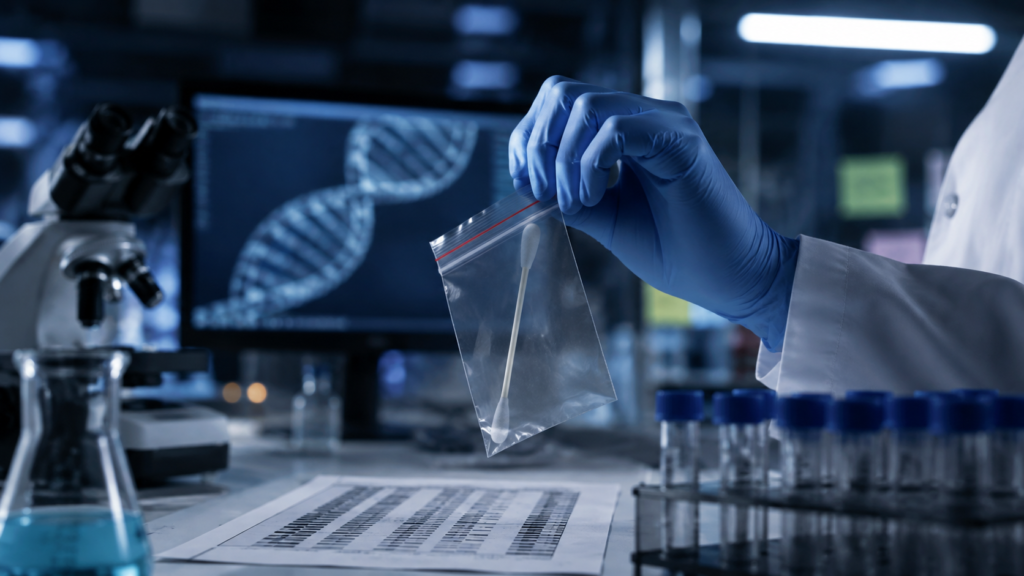
In 2023, Georgia established a dedicated cold case unit within the Georgia Bureau of Investigation, specializing in modern DNA technology. This unit, working alongside Athens Clarke County police, began a fresh review of unsolved cases, including Baker’s.
Investigators returned to biological evidence collected at the original crime scene in 2001. Using advances in forensic DNA science, the Georgia crime lab was able to isolate male DNA from that evidence, something that had not been possible with the technology available two decades earlier.
That DNA profile was entered into CODIS, the national Combined DNA Index System containing roughly 26 million profiles. On April 30, 2024, the sample returned a match. For the first time in 23 years, investigators had a name connected to the crime scene.
The Arrest of Edrick Faust
The DNA match led investigators to Edrick Lamont Faust, an Athens resident who officials say had been arrested and incarcerated multiple times in the years surrounding Baker’s murder. According to the Georgia Bureau of Investigation, no prior connection between Faust and Baker was ever established.
On May 13, 2024, GBI Director Chris Hosey, joined by Athens Clarke County Police Chief Jerry Saulters, FBI representatives, and members of Baker’s family, announced Faust’s arrest at a press conference. Officials credited the breakthrough to biological evidence combined with years of collaborative investigative work.
For Baker’s family, the announcement marked the end of more than two decades of uncertainty, though the legal process was only beginning.
Inside the Trial: What Evidence Was Presented
Faust’s trial began in early February 2026, nearly 25 years after Baker’s death. Prosecutors, led by District Attorney Kalki Yalamanchili, built their case primarily around the DNA evidence developed in 2024, alongside testimony recreating the timeline of Baker’s final hours.
During the trial, the state’s medical examiner testified about the extent of Baker’s injuries. According to that testimony, Baker died from a combination of strangulation, a stab wound that punctured her jugular vein, and blunt force trauma to her head. Evidence indicated a printer cord had been used in the strangulation, and a kitchen knife recovered near her body was consistent with the stab wound.
Testimony also indicated that Baker had been sexually assaulted before her death, and that the fire was set afterward in an apparent attempt to cover up the crime. The exterior doors of the apartment were found locked when firefighters arrived, adding to investigators’ theory that the scene had been carefully staged.
The defense argued that DNA from more than one person was found at the scene, and pointed to Baker’s boyfriend at the time, Chris Melton, as an alternative possibility. Melton testified during the trial, and the defense used his testimony to raise questions about whether every angle of the original investigation had been fully explored.
The judge overseeing the trial, Western Circuit Chief Superior Court Judge Lisa Lott, also ruled on procedural matters during the proceedings, including limits on references to Baker’s personal history under Georgia’s rape shield law.
The Verdict and Sentencing
After a trial lasting roughly two weeks, jurors began deliberating and returned a verdict the following day. Edrick Faust was found guilty on all 12 counts, including malice murder, felony murder, aggravated assault, aggravated sodomy, burglary, tampering with evidence, and first degree arson.
Baker’s family released a statement following the verdict, noting that while the outcome did not erase decades of grief, it did represent accountability from a legal system Baker had believed in and hoped to serve.
At sentencing, Judge Lott handed down two consecutive life sentences plus an additional 45 years, stating that the evidence and the jury’s verdict did not support a sentence centered on rehabilitation. Members of both families addressed the court, including Baker’s mother and brother, as well as relatives of Faust who spoke on his behalf.
The Coleman Baker Act: A Lasting Legacy
One of the most significant, and often underreported, outcomes of the Tara Baker case is its connection to Georgia’s cold case reform legislation. Advocacy tied to Baker’s case, along with other unsolved cases in the state, contributed to the passage of what became known as the Coleman Baker Act.
That legislation helped establish the very cold case unit within the Georgia Bureau of Investigation that ultimately reexamined Baker’s case using updated DNA science. In other words, the case that could not be solved with the tools available in 2001 was eventually solved thanks in part to a law inspired by Baker’s own story.
This connection between advocacy, legislation, and forensic science represents one of the more meaningful legacies of the case, extending its impact well beyond a single conviction.
What the Tara Baker Case Teaches Us About Cold Case Investigations

The Tara Baker case offers a clear example of how forensic science and legal reform can work together to solve crimes that once seemed permanently unsolved. A few key takeaways stand out.
First, biological evidence collected decades ago can still hold answers, provided it is properly preserved. Investigators in 2001 could not have predicted that the evidence they carefully documented would eventually lead to a conviction 23 years later.
Second, dedicated cold case units make a measurable difference. Without a specialized team focused specifically on reexamining older cases with modern tools, Baker’s case may have remained unsolved indefinitely.
Third, advocacy matters. Sustained pressure from Baker’s family, community members, and true crime followers helped keep the case in public view and contributed to the legislative changes that eventually made a resolution possible.
Conclusion
The Tara Baker case spans nearly a quarter century, from a shocking crime in 2001 to a DNA driven arrest in 2024 and a conviction in 2026. It is a story of a promising young woman whose life was taken far too soon, a family that never stopped seeking justice, and a criminal justice system that eventually caught up with modern science.
For anyone following true crime or cold case investigations, the Tara Baker case is a powerful reminder that unsolved does not mean unsolvable. With patience, advocacy, and advancing forensic technology, even decades old cases can reach a resolution.
If there is one practical takeaway, it is this: preserved evidence and persistent advocacy can eventually align, even after 20 or more years have passed.
Frequently Asked Questions
Who was Tara Baker?
Tara Louise Baker was a 23 year old first year law student at the University of Georgia who was murdered in her Athens apartment in January 2001.
Who was convicted in the Tara Baker case?
Edrick Lamont Faust, an Athens resident, was convicted in February 2026 on all 12 charges connected to Baker’s murder.
How was the Tara Baker case finally solved?
A cold case unit within the Georgia Bureau of Investigation reexamined biological evidence from the original crime scene, isolating male DNA that was matched to Faust through the CODIS database in 2024.
What sentence did Edrick Faust receive?
Faust was sentenced to two consecutive life sentences plus 45 years in prison.
What is the Coleman Baker Act?
It is Georgia legislation, connected to advocacy around Baker’s case, that helped establish the state’s cold case unit responsible for reopening and ultimately solving the investigation.
