


Have you ever looked in the mirror and wondered exactly how attractive you really are? You’re not alone. Millions of people search for ways to measure their looks objectively, and that curiosity is exactly why the pretty scale has become one of the most talked-about beauty trends online. A pretty scale is essentially an AI-powered face analyzer that studies a photo of your face and returns a numerical attractiveness score based on symmetry, proportions, and overall facial harmony.
In this guide, we’ll walk through everything you need to know about this AI beauty test how it works, what it actually measures, why it’s gone viral on social media, and how to get the most accurate results when you try one yourself. Whether you’re doing it for fun, curiosity, or to find your best photo angle, understanding the concept behind this attractiveness scale will help you get more out of the experience.
What Is a Pretty Scale?
A pretty scale is an online tool, usually powered by artificial intelligence, that evaluates a photo of your face and assigns a beauty score. Most platforms use a numeric range, often from 1 to 10, or sometimes a percentage, to represent how your facial features align with patterns associated with conventional attractiveness.
The idea behind this kind of facial attractiveness test isn’t new. Beauty measurement concepts like the golden ratio and facial symmetry have existed for centuries in art and anthropology. What’s changed is the technology. Modern AI models can now process a single selfie and instantly calculate dozens of data points, turning an old philosophical idea into a quick, shareable digital experience.
At its core, a pretty scale tool exists to answer one simple, deeply human question: “How attractive am I?” That question drives enormous curiosity, which is exactly why face-rating apps have exploded in popularity across websites and social platforms.
How Does It Actually Work?
Every beauty analyzer of this kind follows a similar basic process, even though the underlying algorithms can differ from platform to platform.
Step 1: Photo Upload
You start by uploading a clear photo, usually a front facing selfie or portrait. Some platforms also allow webcam capture for instant analysis.
Step 2: Facial Mapping
The AI identifies key facial landmarks, such as the corners of your eyes, the bridge of your nose, your jawline, and your lip contours. This mapping process is similar to the facial recognition technology used in many smartphones.
Step 3: Measurement and Comparison
Once the landmarks are mapped, the algorithm calculates ratios and distances between features. These measurements are then compared against patterns that research has associated with perceived attractiveness, such as symmetry and averageness.
Step 4: Score Generation
Finally, all of that data is converted into a single, easy-to-understand result, often paired with a breakdown of individual categories like symmetry, proportion, or skin clarity.
The entire process usually takes just a few seconds, which is part of why the experience feels so satisfying and shareable.
What Does This Beauty Score Test Measure?
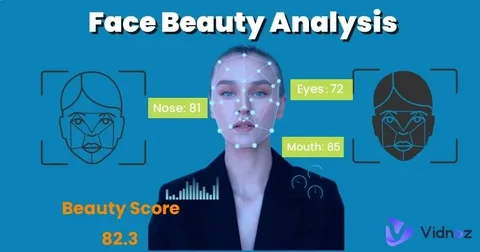
Not all attractiveness analyzers measure the exact same things, but most rely on a similar set of core categories. Understanding these helps you interpret your results more meaningfully rather than just staring at a single number.
Facial Symmetry
Symmetry is one of the most heavily weighted factors in any beauty-rating algorithm. This involves comparing the left and right sides of your face to see how closely they mirror each other. Research has long suggested that humans tend to perceive more symmetrical faces as more attractive, which is why this category carries significant influence in most scoring models.
Facial Proportions and the Golden Ratio
Many of these tools reference the golden ratio, a mathematical proportion found throughout nature and classical art. The theory suggests that faces with proportions closer to this ratio, such as ideal spacing between the eyes, nose, and mouth, tend to be rated as more visually balanced.
Skin Quality
Some platforms also factor in skin tone, texture, and clarity. While this isn’t a permanent trait like bone structure, it does affect how a photo is perceived in the moment, which is why lighting and photo quality matter so much.
Facial Structure and Averageness
Interestingly, faces that are closer to the population average in shape and proportion often score higher. This might seem counterintuitive, but average features are frequently associated with developmental health and stability, which influences how our brains process attractiveness.
Distinctive or Memorable Features
A handful of newer tools also account for memorable or unique features that make a face stand out in a positive way, recognizing that attractiveness isn’t only about blending in with the average.
Why Has This Trend Gone Viral?
If you’ve spent any time on TikTok, Instagram, or YouTube Shorts recently, there’s a good chance you’ve seen someone post their beauty score results. The trend has spread rapidly, and a few key factors explain why.
- Instant gratification: The tool gives you a result in seconds, satisfying curiosity almost immediately.
- Shareability: Most platforms generate a visual result card that’s perfectly formatted for social sharing.
- Low effort, high engagement: Anyone with a smartphone can try it, making the trend extremely accessible.
- Entertainment value: Many people enjoy comparing their scores with friends as a fun, lighthearted activity rather than a serious judgment.
This combination of speed, visual appeal, and social validation has turned the pretty scale into a recurring content trend rather than a one-time novelty.
How to Get the Most Accurate Results
If you want your score to be as reliable as possible, a few simple adjustments can make a noticeable difference.
- Use good lighting. Natural, even lighting helps the AI detect your facial features clearly, leading to a more accurate reading.
- Face the camera directly. A front-facing, neutral expression photo typically produces the most consistent results.
- Avoid heavy filters or makeup changes. Since the analysis looks at raw facial structure, heavy editing can distort the outcome.
- Keep your hair away from your face. Hair covering your eyebrows, jawline, or hairline can interfere with the landmark mapping the tool relies on.
- Try multiple photos. Testing a few different angles can help you discover which photo represents you most accurately, and which one might simply be your best side.
Following these steps won’t guarantee a higher number, but it will help ensure your result genuinely reflects your features rather than lighting issues or camera distortion.
Is the Score Scientifically Accurate?
This is one of the most important questions to ask before taking any beauty score test too seriously. The honest answer is that these tools offer an estimate, not an absolute scientific verdict on your appearance.
Here’s why:
- Beauty standards are culturally influenced. What’s considered attractive varies significantly across regions, time periods, and personal preference, something no algorithm can fully capture.
- AI models are trained on specific datasets. A tool’s “ideal” proportions are shaped by whatever images and standards were used to train the underlying model, which introduces inherent bias.
- A single photo isn’t the whole picture. Lighting, angle, and expression can all shift your result, even though your actual face hasn’t changed at all.
Most reputable pretty scale platforms are transparent about this limitation, framing their tools as entertainment or self-reflection rather than scientific measurement. That’s an important distinction to keep in mind as you explore your own results.
Pretty Scale vs. Other Beauty Tests
You may have come across other tools that promise to rate your looks, so it’s worth understanding how this AI-driven approach compares.
| Feature | Pretty Scale | Traditional Beauty Quiz |
|---|---|---|
| Input method | Photo upload or webcam | Text-based questions |
| Speed | Instant, AI-driven | Often slower, manual scoring |
| Personalization | Based on your actual face | Generic, not photo-specific |
| Shareability | Visual result cards | Limited visual output |
| Categories analyzed | Symmetry, proportion, structure | Subjective self-assessment |
Unlike older personality-style beauty quizzes, this method relies on actual image analysis, which makes the results feel more personal and specific, even if they remain inherently subjective at their core.
Should You Take It Seriously?
It’s completely natural to feel a flicker of anxiety before seeing your result, but it helps to remember what these tools are actually designed for. Most platforms exist purely for entertainment, curiosity, and light self-exploration, not as a definitive judgment of your worth or appearance.
Attractiveness is influenced by so much more than symmetry and proportion. Expression, personality, confidence, and presentation all play a major role in how people perceive one another in real life, none of which a static photo can fully capture.
If you enjoy this kind of experience, treat it the same way you would a fun personality quiz: an interesting data point, not a final verdict. Used this way, it can actually be a positive, low-stakes way to learn more about your facial features and discover flattering angles for future photos.
Final Thoughts
The pretty scale trend taps into something deeply human: our curiosity about how others see us. Whether you’re trying it for fun with friends, searching for your best camera angle, or simply exploring the technology behind AI facial analysis, this kind of beauty test offers a quick, engaging way to satisfy that curiosity.
Just remember that any score is an algorithmic estimate shaped by data and design choices, not an objective measure of your value or beauty. Approach the pretty scale with curiosity rather than pressure, and you’ll get exactly what these tools are meant to offer: a little fun, a little insight, and maybe a great new profile picture along the way.
Frequently Asked Questions
What is a good pretty scale score?
Most tools use a scale of 1 to 10, where scores above 7 are generally considered high. However, since every platform uses different algorithms and training data, a “good” result can vary significantly from one tool to another.
Is the pretty scale test free to use?
Yes, the majority of these AI beauty testers available online are completely free, requiring only a photo upload with no signup or payment needed for a basic score.
Does the pretty scale store my uploaded photos?
Reputable platforms typically state that photos are processed temporarily and deleted immediately after analysis, though it’s always wise to review each tool’s privacy policy before uploading.
Can lighting really affect my results?
Absolutely. Since the analysis relies on AI detecting facial landmarks and skin texture, poor lighting can distort measurements and lead to a less accurate score compared to a well-lit, clear photo.
Is this the same as a golden ratio face test?
They’re closely related but not identical. Many pretty scale tools incorporate golden ratio principles as one factor among several, including symmetry and facial structure, rather than relying on the golden ratio alone.
